

Our body is a unique piece of engineering, where every bone, every muscle, and even the tiniest joint is in its exact place for a specific purpose. Since we perform our TMJ Pain Relief Savannah procedure quite often — as many of our patients come specifically with jaw joint issues — we decided it’s time to create a simple explanation of “What is TMJ”.
Key Takeaways
- We’ll give you a short and simple explanation of what the temporomandibular joint is and what it does in our body.
- Of course, we’ll also mention a few words about misalignment therapy and the methods dentists use to help improve the condition.
- We’ll share a surprising secret about recovery time, because many of our patients assume this condition requires long and intensive treatment.

A Quick Note on What Is TMJ
It’s thanks to this jaw that we can open and close our mouth, chew, speak, and even yawn. It’s a stable connection that anchors our jaw directly to the skull. This biological mechanism is located right next to the ear, which is why when something goes wrong, people often assume it’s an earache, but in reality, it’s inflammation.
Let’s start with the basics: what is TMJ? This condition can be caused by a variety of factors, both physical and even psychological.
They affect how the entire jaw system functions, leading to misalignment, imbalance, pain, and other symptoms we’ve already covered in our Patient Education materials.
Explained: What Is TMJ Disorder?
By the way, many of the patients who go through our Headaches Savannah program at Beyond Exceptional Dentistry actually have joint irregularities.

So, what is TMJ disorder really? It is an uncomfortable malfunction in the movement system of mandibular biomechanics, affecting its range of motion, coordination, and natural flexibility. In other words, something triggers the development of temporomandibular disorder and prevents it from proceeding smoothly and normally.
What makes this condition especially uncomfortable is that it often comes with side effects like migraines, muscle spasms, jaw pain, hearing issues, and strange noises in the ears. And yes, it is not a single condition but rather a broad term that encompasses different kinds of problems affecting the part.
In Short: What Causes TMJ
Our patients often ask us: What causes TMJ in most cases? It may sound simple, but the cause is often something like clenching your teeth too hard or grinding them during sleep. In other cases, it all started after a traumatic event — a hit to the face, a fall, or even a car crash. For some, it all began after dental work that caused an improper bite alignment. Frequent causes also include stress and even poor posture.
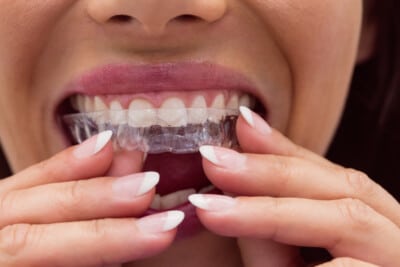
Next up: how to fix TMJ? The treatment plan depends on the cause. For milder cases, we usually recommend night guards and various compresses. If stress is the main trigger, we’ll suggest appropriate therapy. If we see that a patient needs correction from an oral surgeon, we recommend our Sedation Dentistry Savannah to address the dental causes of the condition.
So, how long does TMJ last? Based on our experience, most people start feeling better within a couple of weeks, as long as they follow our recommendations. But full recovery duration can take anywhere from a few weeks to several months (again, it all depends on the cause and the stage of the condition).
Conclusion
We’ve just covered: what is TMJ? Now here’s another important question: who treats TMJ? When the problem is in the oral cavity, the right specialist is a dentist (gnathologist).
Come in to Beyond Exceptional Dentistry for an exam and treatment: we’ll identify the cause and offer innovative treatment options, like our Ozone Therapy Savannah, along with highly effective cosmetic solutions for your smile and facial appearance.