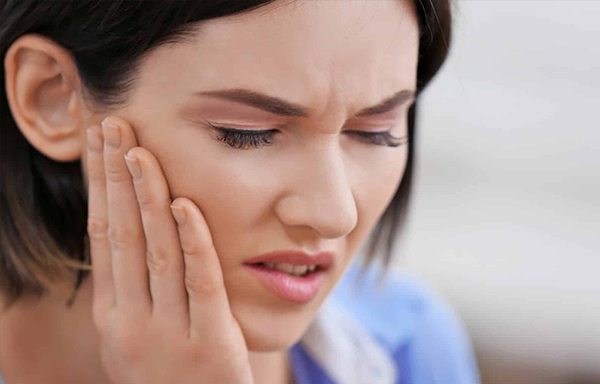

Can TMJ Cause Neck Pain or Stiffness? Savannah Dentists Explain
Our body is designed in a way that every organ, every part plays a role—some more significant, some less. But we feel good and comfortable when everything inside us works properly and without annoyance. The nape is another important element of our body, as it contains blood vessels, neural pathways, airways, and the spinal cord, while its muscles keep the head and let for movement. It’s our transportation hub from the brain to the peripheral systems. Tension or inflammation in the cervical spine may lead to various symptoms, including localized pain, cephalgia, vertigo, sleep disturbances, and systemic exhaustion. The condition of the neck has a direct impact on posture, respiration, emotional state, and overall energy. We regularly meet patients who have TMJ neck pain, so we decided to put together this article to clarify how it shows up and why it matters for your overall wellness.
Key Takeaways
- Does TMJ cause neck pain?—that’s the main question we’ll be asking ourselves here, and we’ll deliver you the most logical explanations and insights to better understand the connections between symptoms.
- Additionally, we will examine the potential relationship between temporomandibular imbalance and associated pain, focusing on interconnections between body structures and neural function. And we’ll walk you through another common concern—can TMJ cause neck and shoulder pain?
- You will discover info about TMJ neck pain relief, hacks to soothe your symptoms, trigger zones to watch for, available therapies, and easy exercises you can do anytime.
Is TMJ Neck Pain Real or Just a Myth?
To begin, let’s look at some of the general grounds behind neck discomfort. Muscular structures are the most typical origin of pain in the upper spine area: due to damage, awkward pose, or intense strain, you might suddenly feel a pulling pain that gets worse with movement. There are also neurological causes, and when that happens, you may feel a sharp, shooting pain that radiates into your shoulder or even your head.
So, the main causes are:
- Sitting at your computer for too long without moving.
- An improper pillow or non-ergonomic sleep positioning.
- Overexertion during physical activity or prior trauma.
- Cervical osteochondrosis and herniated discs.
- Irritated nerves or painful muscle contractions.
- Muscular overcooling due to prolonged cold exposure.
- Stress that builds up in your body.
- Infections that cause swelling, like lymph nodes or even meningitis.
But at Beyond Exceptional Dentistry, we have encountered cases of TMJ neck pain. It’s not a widespread symptom, but it does occur. Jaw tension can set off a chain reaction that eventually causes discomfort. That’s why, if you don’t look for ways to achieve jaw tension relief—either through medication or physical therapy—the painful experience is likely to persist.

Can TMJ Cause Neck Pain and How Does It Happen?
So, can TMJ cause neck pain, and how does it actually happen?
The whole system might seem complicated at first, but it’s actually much simpler than it looks. Common mandibular issues are often accompanied by various types of referred pain and TMJ-related headaches. An annoying feeling in your jaw can stem from multiple sources, including bruxism, displacement, or the arrangement of new dental implants that affect bite dynamics or bone pressure.
Dysfunction often leads to compensatory tension in nearby muscles, which may radiate discomfort to areas like the temples, ears, upper back, and neck. These manifestations are commonly observed alongside clicking sounds when opening the oral cavity or limited mobility. Signs like TMJ and a stiff neck aren’t very ordinary, but in our practice, we’ve seen how they can significantly change everyday comfort and function.
Our Tips on How to Relieve Neck Pain from TMJ
Of course, most people first look for a universal medication that can instantly take away all the distress. And yes, to relieve neck pain from TMJ, you can take something of a kind of nonsteroidal anti-inflammatory drug like ibuprofen or diclofenac. Sometimes, muscle relaxants help loosen tight areas. And when anxiety or teeth grinding is part of the picture, light sedatives or calming meds can make a real difference.
In cases where the discomfort stems from a neurological origin, such as a cervical nerve issue, a course of gabapentin or medications from the neuroprotective group can really help calm things down. In some cases, topical ointments or pain-relieving gels are used and applied with gentle massage. It’s important to understand that medications provide only temporary relief, while the main TMJ pain relief treatment often includes rehab exercises, mouthguards, and bite correction. While you’re waiting to get in with your doctor, you can try doing some calming TMJ neck exercises:
- Perform slow mouth-opening and closing motions while seated.
- Go on with forward and backward jaw mobilization, then proceed to side-to-side motion.
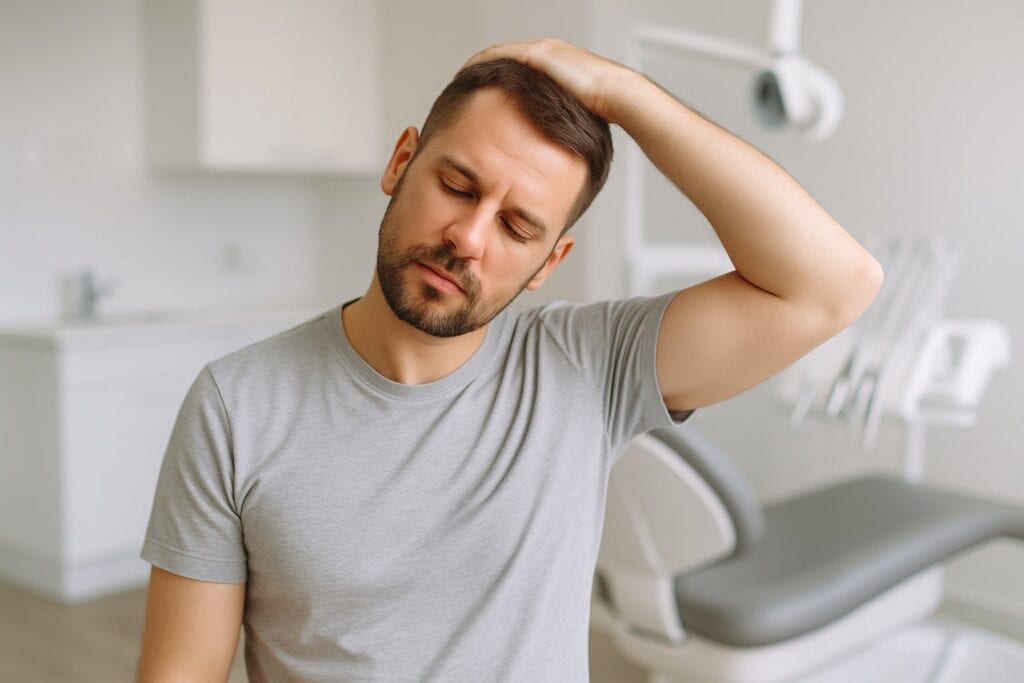
- Tilt your head to one side until it gently rests toward your shoulder.
- Trapezius stretch: hold one arm down while tilting your head to the opposite side.
- Circular shoulder rotations to relieve upper body pressure.
Can TMJ Cause Neck and Shoulder Pain and How Can You Manage It?
The most prevalent clinical issue related to the mandible is, of course, TMJ ear pain. But now let’s take a glimpse at the expert perspective on the question: can TMJ cause neck and shoulder pain—and the best ways to deal with it.
Yes, excessive tension can definitely be released to more distant areas and even be the cause of TMJ neck and shoulder pain. It is the result of coordinated physiological mechanisms acting in synergy among the coordinated function of both jaw-closing muscles and cervical stabilizers, including the temporalis, masseter, medial/lateral pterygoids, sternocleidomastoid, and trapezius, which operate as an interconnected musculoskeletal unit.
TMJ muscle strain shows up in the following ways:
- Deep, nagging tension.
- Development of trigger points that hurt when pressed.
- Never-ending soreness in the lower face.
- Difficulty fully opening the mouth.
The best way to deal with this kind of pain is to fix the dental occlusion and add in some physical therapy, such as therapeutic manipulation of cervical and shoulder musculature, seeing a manual therapist, trying acupuncture, warming up tight muscles, and doing some gentle stretches.
Are Neck Stretches For TMJ Actually Helpful?
In addition to medication, neck stretches for TMJ have shown good results. One of the simplest and most effective exercises you can do at home is head tilts in various directions. Begin with side-to-side tilts, followed by shifting forward and then back. Perform each motion slowly and without sudden jerks.
An integrative treatment model delivers the best results: try adding TMJ jaw relaxation techniques like wearing a splint, getting laser or massage therapy, working with a dentist on your bite, or even using Botox.
Neck Pain and TMJ Symptoms: What to Pay Attention To
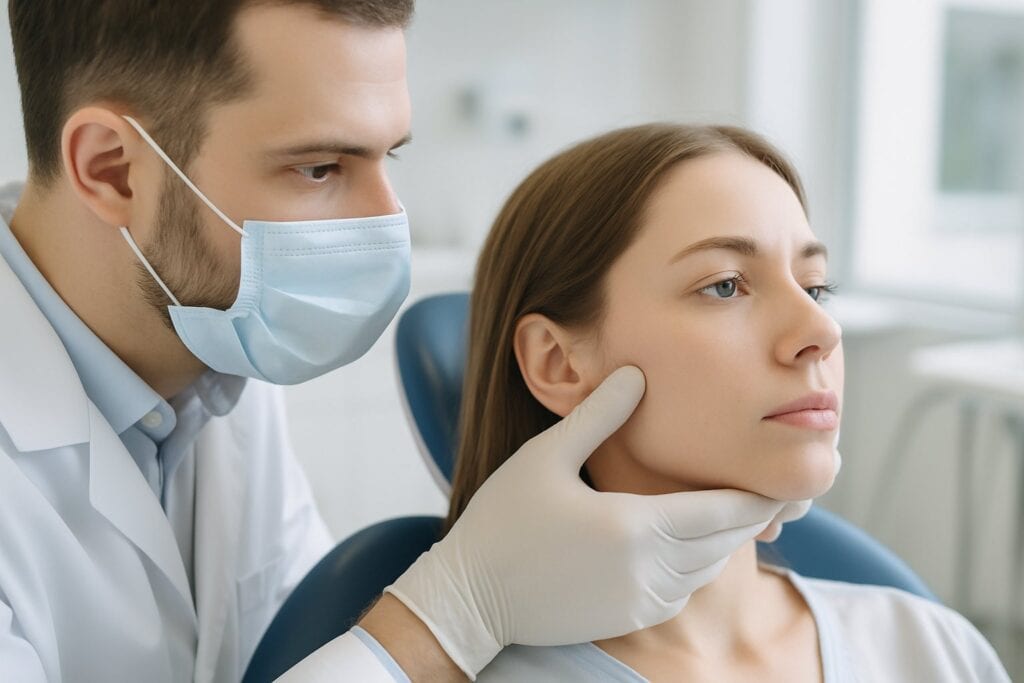
Always listen to your body when it starts sending you signals. You can easily recognize neck pain and TMJ symptoms if you stay attentive—and by seeing a doctor early, you can avoid days of discomfort. One of the first things we notice in patients is TMJ jaw stiffness—it makes even simple things like talking, chewing, or opening the mouth feel awkward and strained. Next comes jaw clicking, that small but noticeable sound that often shows up when the joint isn’t moving smoothly. Any unusual sounds near the ear should be a reason for concern. And third, there’s that unclear, collarbone-area pain that’s hard to pinpoint. If these symptoms are present, it’s advisable to consult a healthcare professional.
FAQ
When neck discomfort is caused by temporomandibular dysfunction, it’s often due to joint dysfunction, creating extra muscle tension and limiting neck movement.
If your pain is accompanied by popping sounds and trouble opening your mouth, or muscle tension around the jaw, TMJ is likely the source.
Totally possible. If it has shifted due to outside factors, it can put extra strain on your muscles and lead to various types of referred pain.
Start with basics like chin tucks, tilting exercises for the neck and stretching the trapezius. Shoulder rolls help too. But real progress begins with restoring proper jaw alignment.
Conclusion
Even a small part of our body—like this tiny but important joint—plays a major role in our everyday comfort. And when it starts to malfunction, it can cause sleepless nights and awkward moments in social situations.
We truly hope this article helped clear things up if you’ve ever wondered: Can TMJ cause neck pain?
It’s important to remember that while this condition can occur, it’s not a serious case if you respond calmly and take action early. If you’re experiencing TMJ neck pain, consult our specialist promptly. With the right combination of corrective techniques and therapies, recovery often comes faster than expected. Visit us at Beyond Exceptional Dentistry—you’ll find advanced technology and trusted Sedation Dentistry Savannah to help restore both your health and appearance.