

Top 5 Things to Know About Porcelain Veneers in 2025: What They Are, How They Work, and Stain Myths
- By Dr. Ryan Reeves
- August 25, 2025
- Dental Implants
Nowadays, having nice white teeth is a must-have for good appearance and maintaining your health. Contemporary aesthetic dentistry makes it possible to adjust tooth shape, color, and symmetry while keeping procedures minimally invasive.
One of the most popular options is porcelain shells — tiny covers that make your dentition look even, healthy, and natural. They serve as a solution for both correcting imperfections and creating a more dramatic transformation of the grin. Many people have heard of them, yet questions remain: how are they applied, is coffee still allowed, and will they keep their brightness? Therefore, what are porcelain veneers? In this blog piece, we will explain and cover every detail so that you can make the most informed decision.
Main Takeaways
- We’ll explain what dental veneers are, how they enhance tooth hue, and how they can even transform the formation of your smile completely, review the stages involved in the procedure, and explain why it is necessary to turn to experienced professionals in cosmetic dentistry.
- We’ll take a closer peek at the durability of veneers and what impact everyday food and drinks can have on their shade. And discuss the nuances of whitening and the importance of selecting the proper shade before placement.
- We will draw attention to suitable maintenance and product selection for maintaining a perfect look: choosing the right toothpastes, cleaning routines, preventive tips against plaque and loss of shine, and ways to prolong their life.
Do Porcelain Veneers Stain and Tips to Care for Them
- espresso and Americano
- black and green tea
- red and white wine
- beets
- berries (blueberries, raspberries, cherries)
- strong spices like turmeric
- soy or teriyaki sauces
- tomato juice or Bolognese-style sauces
- brightly colored sodas
What makes the difference is that, unlike natural enamel, they don’t have a porous surface. The material has a smooth and polished, almost glass-like surface, which prevents pigments from food and beverages from attaching. That means your habits and favorite flavors stay unchanged — no need to fear tomato traces or coffee stains on veneers dulling your smile.
Remember, holding your teeth bright means daily brushing, using a water flosser, and scheduling routine dental checkups. Polishing procedures are also important, as they contribute to sustaining cover brightness and smoothness. It’s worth knowing that shells don’t stain on their own — it’s the cement or the tooth beneath that can darken if the seal isn’t perfect. So if you notice color differences, that’s your sign to visit the doctor, not to give up your favorite routines.
These notable benefits have contributed to the widespread popularity of this corrective dental approach. While patients once primarily visited our clinic for dental implants Savannah, veneers have now become more popular among those seeking a confident smile with minimal intervention.
From Start to Finish: How Do Porcelain Veneers Work
- 1. First of all, schedule a consultation with our experienced cosmetic dentist. At the first visit, he will evaluate your teeth and work with you to shape a plan that matches your goals, your ideal smile line, and the results you dream of.
- 2. The following stage is all about preparation: the dentist draws only a delicate layer of enamel and polishes it with precision, opening space for the future veneers.
- 3. Then the dentist takes impressions and sends them to the lab. While you wait, you might get temporary pieces to wear.
- 4.The last step is bonding with professional dental cement and giving them a flawless polish.
The procedure typically requires only several visits, producing results that resemble complete dental reconstruction: improved whiteness, symmetry, contour, and patient confidence.
For those who wish to preserve the natural look of their own teeth without dramatic Hollywood-style changes, another smile makeover option at our clinic is VitaSmile. This treatment isn’t the same as veneers or implants — it’s a full smile reconstruction, repairing chips, clearing away stains, and fixing little flaws that bother you.
How to Select the Best Toothpaste for Porcelain Veneers
- Sensodyne Pronamel
- Colgate Sensitive Pro-Relief
- Tom’s of Maine Fluoride-Free
- Crest Gum & Enamel Repair
- Hello Naturally Whitening Fluoride
- Biotène Fresh Mint Original.
People Also Ask: Can Porcelain Veneers Stain?
Can You Whiten Porcelain Veneers or Not?
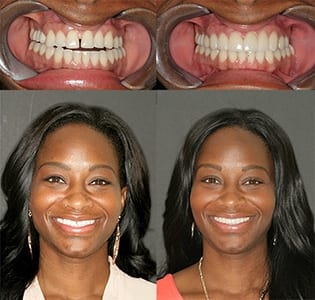
Why We Share Porcelain Veneers Before and After Pictures
Usually, when we perform a full surgical restoration of the dental arch with dentures in Savannah, GA, we take photos so that the client can properly evaluate the work we have done. We also encourage you to see the true results of aesthetic dentistry with our porcelain veneers before and after pictures.
Such before-and-after shots capture the transformation beautifully, showing how smile covers can turn an ordinary grin into something radiant in only a few visits. These transformations are truly motivating — especially since the process takes just a couple of weeks. Whether it’s chipped enamel, discoloration, or a gap in the front, the benefits of porcelain veneers mean you can fix shape and color fast and safely. The photographs are prepared for discussion with the dentist and serve to demonstrate possible outcomes to other patients. It also shows the emotional side of the treatment — with straight, white, natural-looking veneers, you’ll find yourself smiling all the time.
The before-and-after shots really do the talking and motivate everyone, because the difference is visible instantly.
Final Words on This Topic
So, we have clarified ‘What are porcelain veneers?’ and what the placement procedure involves, and we hope you realize it’s actually simple and fast — not as complicated as promo videos make it look.
We also hope that we have provided a comprehensive answer to the question: Can porcelain veneers stain?; along with guidance on keeping whiteness and the necessary hygiene procedures.
Therefore, if the idea has already crossed your mind, contact us to receive the best porcelain veneers Savannah. Our specialists are waiting for you at the consultation and will gladly clear up every question you might still have.
Frequently asked question
This form of aesthetic correction is achieved with thin, high-quality dental porcelain, the material itself ensuring a natural look when the shade is properly selected.
No — veneers won’t whiten, because porcelain doesn’t respond to whitening gels at all. When considering this procedure, experts advise starting with enamel whitening and then choosing the shade of your smile covers before placement.
The glossy finish on porcelain shells makes them really resistant to pigments, so you won’t get coffee or red wine stains. However, plaque may form and accumulate along the edges or between the teeth. Therefore, it is advisable to schedule periodic professional cleaning.
The great thing about veneers is that they don’t need constant or unpleasant treatments. All it takes is cleaning with the right toothpaste, using a soft brush, and adding a water flosser — just like you would for your biological teeth. And be sure to visit your dentist at least once or twice a year for professional cleaning, which will help preserve the shine, form, and overall oral health.